
Mastering Leadership and Management: Your Complete Guide to Leading Teams and Driving Results
Leadership and management skills make the difference between good professionals and great ones. This guide helps managers, team leaders, supervisors, and ambitious professionals who want to level up their ability to lead people and manage projects effectively.
Many people think leadership and management are the same thing, but they’re actually quite different. Leaders inspire and motivate people toward a vision, while managers focus on planning, organizing, and executing day-to-day operations. The best professionals master both skills.
We’ll start by breaking down the key differences between leadership and management so you know when to wear each hat. Then we’ll dive into building essential leadership competencies like emotional intelligence, communication, and vision-setting. Finally, you’ll learn core management skills including strategic planning, performance management, and resource allocation that keep teams running smoothly.
By the end, you’ll have a clear roadmap for developing both your leadership presence and management expertise – two skill sets that work together to create exceptional results.
Understanding the Fundamental Differences Between Leadership and Management

Defining leadership versus management roles and responsibilities
Leadership and management serve distinct yet complementary functions in any organization. Leaders focus on setting vision, inspiring change, and guiding people toward a shared future. They ask “What should we do?” and “Why should we do it?” Leaders challenge the status quo, take calculated risks, and motivate teams through influence rather than authority.
Managers, on the other hand, concentrate on execution, organization, and maintaining systems. They ask “How do we get this done?” and “When will it be completed?” Managers create processes, allocate resources, monitor progress, and ensure tasks are completed efficiently and on time.
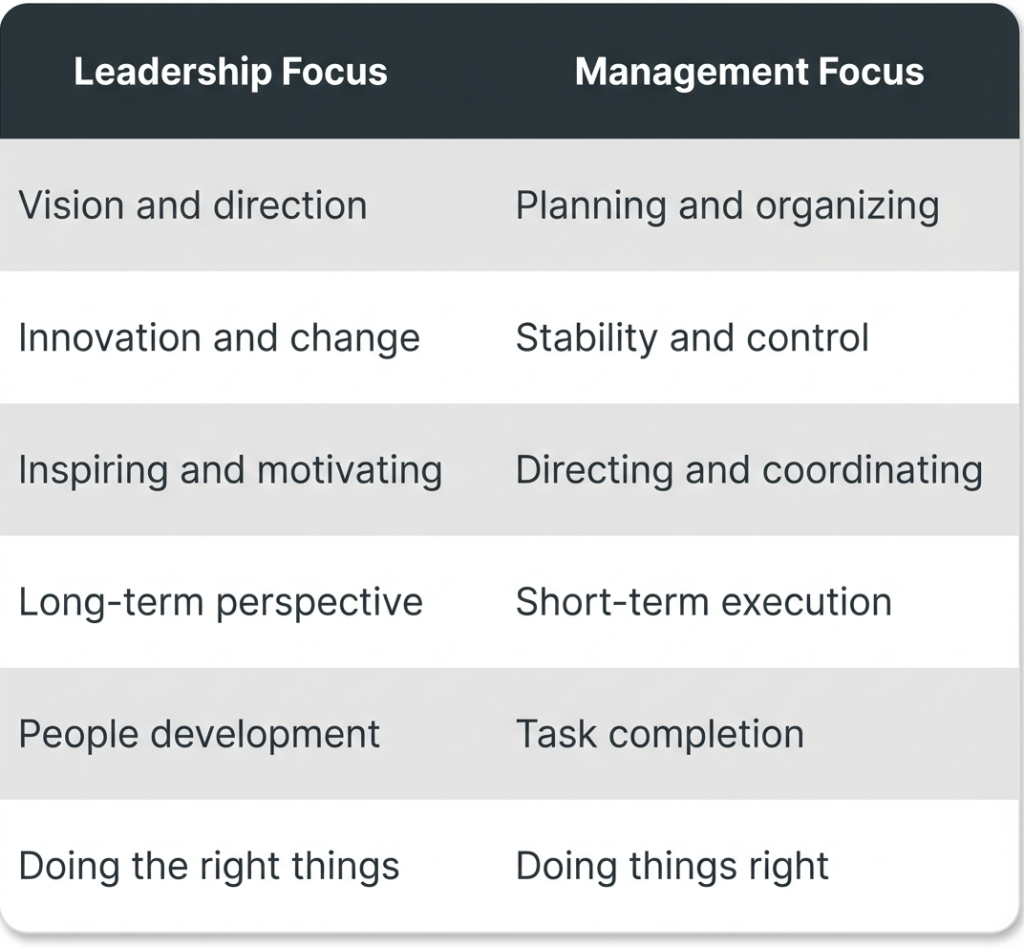
The responsibilities also differ significantly. Leaders build relationships, communicate purpose, develop talent, and create culture. They spend time coaching, mentoring, and empowering others to reach their potential. Managers handle budgets, schedules, performance metrics, and operational details. They monitor compliance, solve immediate problems, and maintain productivity standards.
Recognizing when to lead versus when to manage
Knowing when to switch between leadership and management modes requires situational awareness and emotional intelligence. During times of change, uncertainty, or crisis, leadership skills become essential. When teams feel lost or unmotivated, they need someone to paint a compelling picture of the future and rally them around a common cause.
Management skills shine during periods of stability when execution matters most. When deadlines loom, resources are tight, or quality standards must be maintained, teams need clear direction, structured processes, and careful oversight.
Consider these scenarios:
- Lead when: Teams face major transitions, morale is low, innovation is needed, or strategic direction is unclear
- Manage when: Projects have tight deadlines, resources are limited, procedures must be followed, or performance is lagging
The best professionals read the room and adapt accordingly. They understand that different situations call for different approaches, and they’re comfortable switching between inspiring and directing as circumstances demand.
Developing both skill sets for maximum effectiveness
Building expertise in both areas creates versatile professionals who can handle diverse challenges. Start by identifying your natural tendencies – are you more comfortable inspiring others or organizing systems? Most people lean toward one side, but exceptional professionals develop both capabilities.
For leadership development, focus on:
- Vision creation: Practice articulating compelling futures and connecting them to current work
- Communication skills: Learn to tell stories, ask powerful questions, and listen actively
- Emotional intelligence: Develop self-awareness and the ability to read and respond to others’ emotions
- Change management: Build comfort with ambiguity and skills for guiding transformation
For management development, concentrate on:
- Planning and organization: Master project management tools, scheduling techniques, and resource allocation
- Performance measurement: Learn to set clear expectations, track progress, and provide feedback
- Problem-solving: Develop analytical thinking and systematic approaches to challenges
- Process improvement: Understand how to streamline operations and eliminate inefficiencies
The strongest leaders combine both skill sets seamlessly. They inspire teams with compelling visions while ensuring practical execution through solid management practices. This dual capability makes them invaluable assets who can drive both innovation and results.