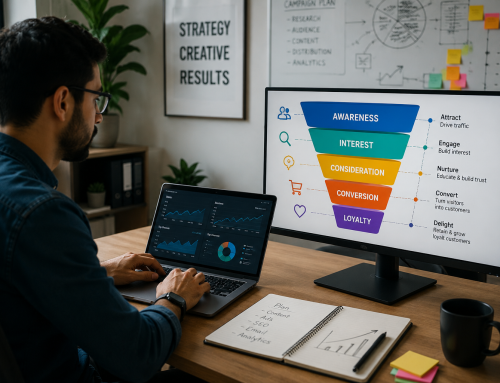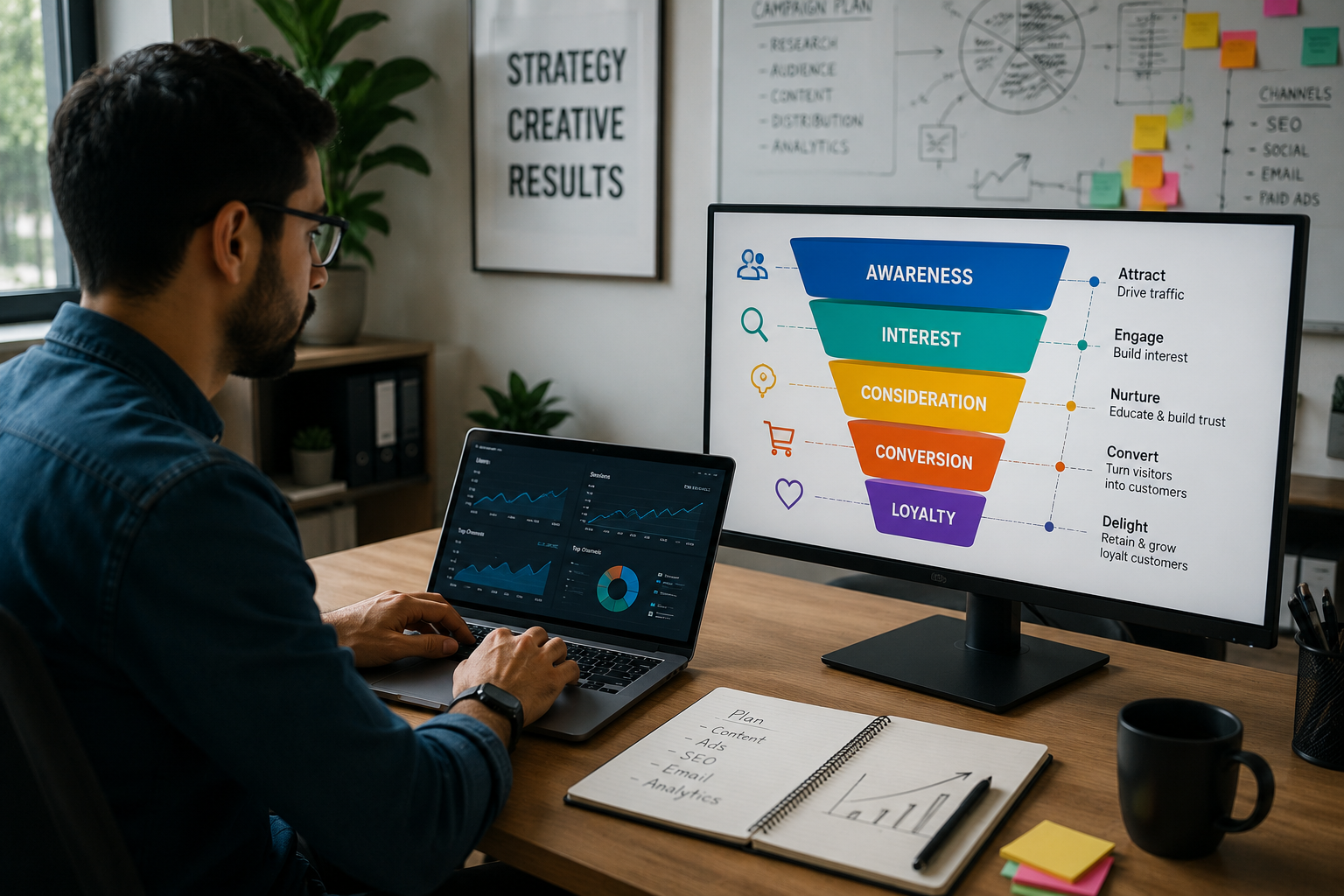
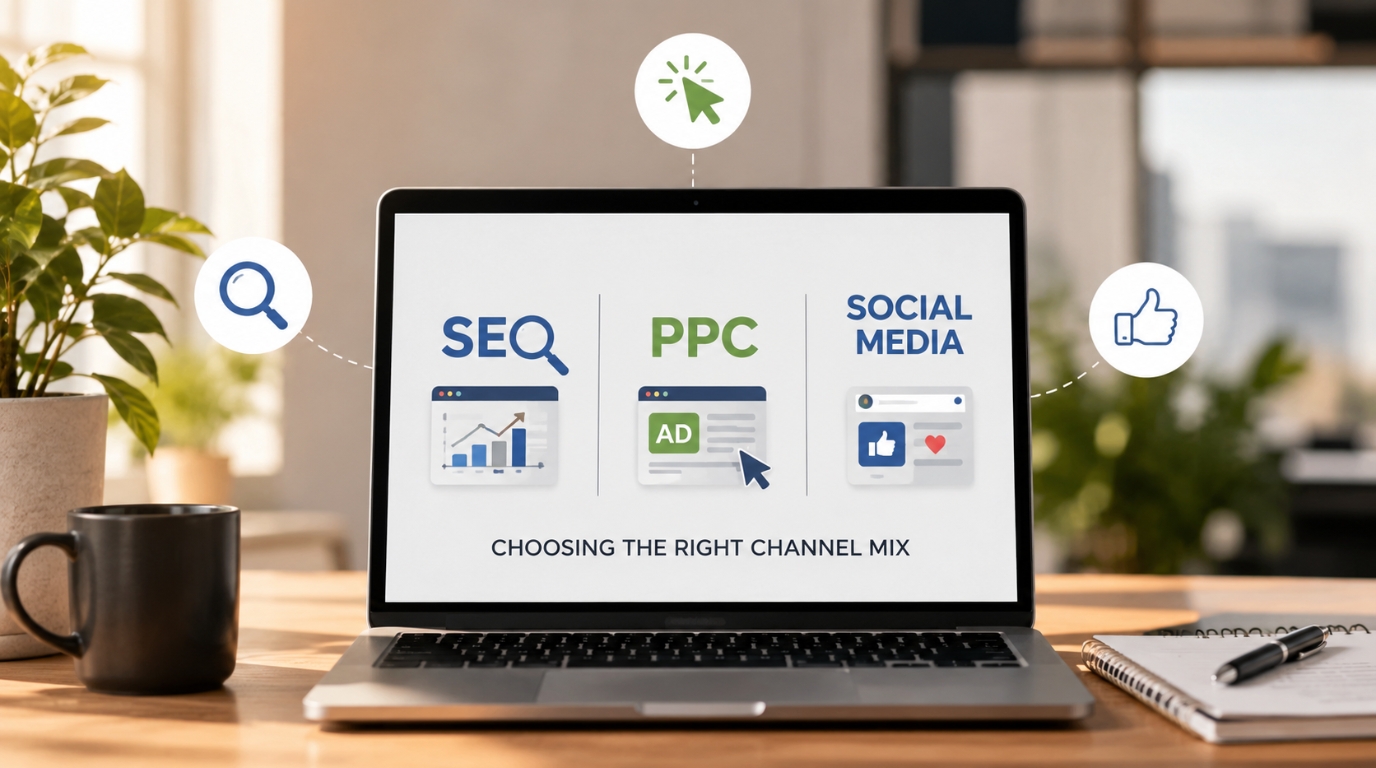
The best digital marketing channel is not the one receiving the most attention this month. It is the channel that can reach the right customer, at the right stage of demand, with economics the business can sustain.
SEO, pay-per-click advertising and social media solve different problems. Treating them as interchangeable leads to unrealistic expectations. A practical channel mix gives each one a role and connects them through a consistent offer, landing experience and measurement plan.
SEO: Capture existing demand and build durable visibility
Search engine optimisation helps useful pages become discoverable when people search for relevant questions, products or services. It includes technical accessibility, clear site structure, on-page relevance, helpful content, internal linking and authority earned over time.
SEO is well suited to subjects with recurring search demand and to businesses that can explain a problem better than competitors. It can create compounding value because a strong page may attract relevant visits long after publication. However, results are not immediate, rankings are not guaranteed and weak pages do not become valuable simply because a keyword was added repeatedly.
The Google SEO Starter Guide is a useful foundation for building crawlable, understandable and people-focused pages.
Measure non-branded visibility, qualified organic visits, engagement, conversions, assisted conversions and the quality of enquiries generated from search.
PPC: Buy immediate access to measurable demand
Pay-per-click advertising allows a business to enter an auction for attention. Search advertising can capture people expressing intent, while display, video and social advertising can create or reinforce demand. PPC is useful for launching an offer, testing messages, reaching defined audiences and generating data quickly.
The speed comes with a cost. When spending stops, paid traffic usually stops. Competitive auctions can make weak economics visible very quickly. Success depends on targeting, creative, landing pages, tracking and follow-up, not only bid settings.
Measure impression share where relevant, click-through rate, landing-page conversion, cost per qualified lead, customer acquisition cost, revenue, margin and incremental lift.
Organic social media: Earn attention and build familiarity
Organic social media helps a brand demonstrate personality, share expertise, join relevant conversations and maintain contact with an audience. It is especially useful when customers benefit from seeing the people, process, product or community behind the offer.
Reach can be inconsistent, and follower growth does not automatically create sales. Social content needs a clear audience and recurring themes. Distribution should be supported by employee participation, partnerships, email and selective paid promotion where appropriate.
Measure qualified engagement, profile actions, relevant direct messages, website visits, assisted conversions, audience quality and the themes that repeatedly attract the right people.
Paid social media: Create demand with audience and creative testing
Paid social advertising reaches people based on audience signals and platform behaviour rather than an explicit search at that moment. It works best when the creative makes the problem or opportunity immediately understandable and the offer fits the audience.
Creative fatigue, low-intent leads and inaccurate targeting assumptions can reduce performance. Test distinct concepts, not only minor changes in colour or wording. Review downstream quality because a low-cost lead can be expensive if it never becomes a customer.
Email: Convert and retain attention you already earned
Email is not an acquisition channel in isolation because a business first needs a legitimate way to build the list. Once permission exists, email can support consideration, onboarding, repeat purchase and reactivation. It connects the other channels by turning temporary visits into an ongoing relationship.
Measure deliverability, meaningful clicks, conversions, revenue, unsubscribes and performance by segment. Open-rate data can be imperfect, so avoid making major decisions from opens alone.
Five questions for choosing the mix
- Is the audience already searching for this solution, or must the business create awareness first?
- How quickly does the business need reliable learning or results?
- What is the value, margin and typical sales cycle of a customer?
- Which content or creative capability can the team sustain consistently?
- Can the business track outcomes from first interaction to qualified sale?
Three practical starting mixes
A local service business with active search demand
Prioritise technically sound local pages, useful service information and local search visibility. Use PPC to test high-intent terms and fill immediate demand. Use social media to show real work, answer common questions and build trust before prospects make contact.
A new product customers do not yet search for
Lead with social, video, partnerships and paid creative testing to make the problem and solution understandable. Build search content around the problem category as awareness grows. Capture interested visitors through email and remarketing.
A professional education or high-consideration offer
Combine search-led guides with detailed programme pages, paid search for high-intent queries, social proof and remarketing. Use email or direct follow-up to answer questions. Measure applications and enrolments, not only brochure downloads or form submissions.
A disciplined 90-day channel test
- Weeks 1-2: Define the audience, offer, conversion, baseline and tracking.
- Weeks 3-4: Build one focused landing journey and a small set of distinct messages.
- Weeks 5-8: Run controlled tests across the most plausible acquisition channels.
- Weeks 9-10: Compare lead quality, acquisition cost and conversion barriers.
- Weeks 11-12: Strengthen the winning combination and document the next experiment.
Do not divide a small budget across every available platform. Concentrate enough activity to learn, while keeping the test small enough that failure is affordable.
Common channel-selection mistakes
- Choosing a platform because competitors appear active there.
- Expecting SEO to produce instant demand.
- Scaling PPC before fixing the landing page and follow-up process.
- Treating social engagement as revenue.
- Running channels separately with conflicting messages and definitions.
- Stopping after a short test that did not generate enough evidence.
Learn how the channels work together
The London School of Business Digital Marketing in Practice programme covers SEO, websites, social media, content, paid advertising, email, analytics and campaign planning through practical assignments. Learners develop the judgement to select channels, execute campaigns and evaluate results as one connected system.
Frequently asked questions
Should a new business start with SEO or PPC?
Often both can play a role. PPC can test demand and messages quickly, while SEO builds useful assets for recurring search needs. The right balance depends on urgency, budget, search volume, competition and the quality of the website.
Is social media necessary for every business?
No channel is mandatory. Social media is valuable when the audience uses it for discovery, trust or community and when the team can create relevant content. A business should not maintain several inactive profiles simply for appearance.
How many channels should a small team manage?
Use the fewest channels needed to cover acquisition, conversion and retention effectively. One or two well-run acquisition channels supported by email and a strong website usually teach more than fragmented activity across many platforms.