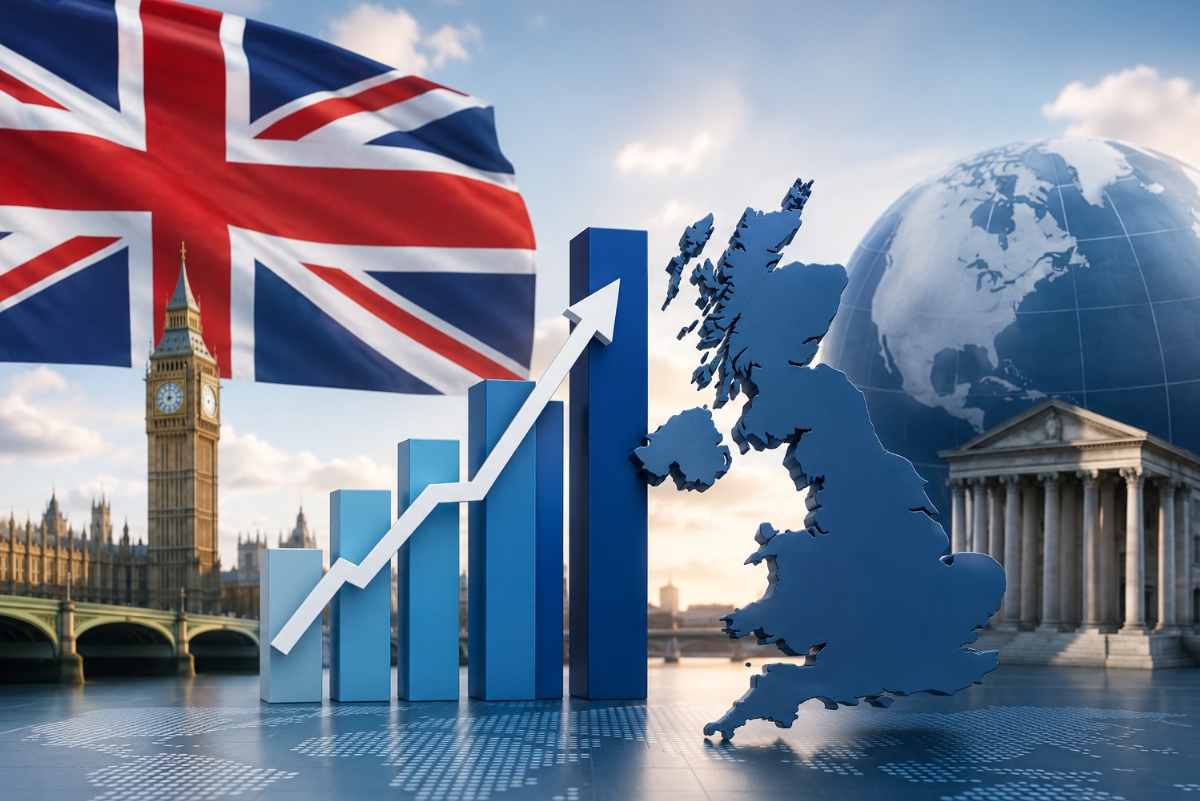
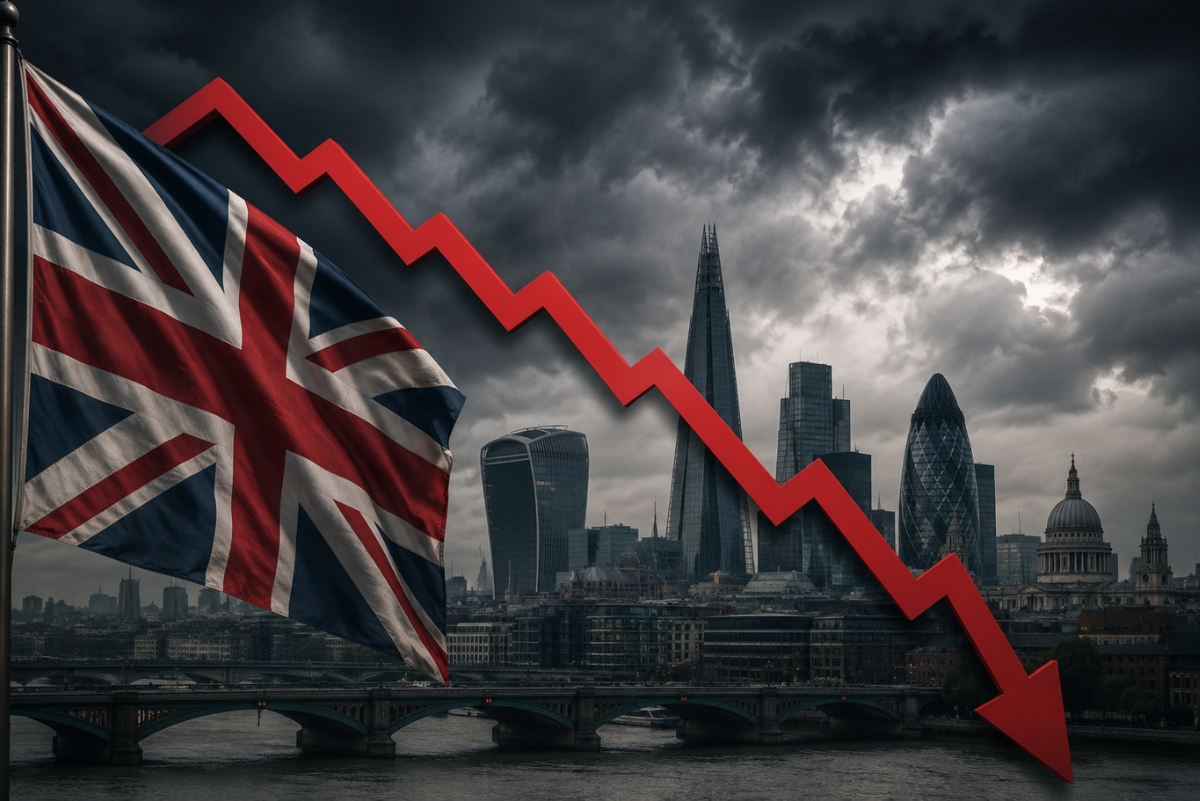
The UK business confidence July 2026 reading has delivered a devastating blow to UK economic optimism. The Institute of Directors sentiment index plunged to minus 61 in June, down from minus 53 in May, marking the sharpest decline in business sentiment this year.
UK Business Confidence July 2026: The IoD Data Explained
The UK business confidence July 2026 figure represents a critical threshold. Revenue expectations also weakened dramatically, with the relevant sub-index falling to 11 from 27, its lowest reading this year. Anna Leach, the IoD’s chief economist, confirmed that overall operating conditions worsened in June despite a fragile peace in the Middle East.
Energy and fuel costs remain the dominant concern driving the UK business confidence July 2026 collapse. A staggering 72% of businesses reported energy cost increases, with a fifth facing rises of at least 25%. The US-Iran war has disrupted energy markets through Strait of Hormuz shipping routes, creating sustained inflationary pressure that the Bank of England cannot easily control.
UK Business Confidence July 2026: Bank of England’s Dilemma
Bank of England Governor Andrew Bailey acknowledged that market pricing for two UK interest rate cuts this year was not unreasonable before the US-Iran war pushed up energy prices and inflation risks. The UK business confidence July 2026 data confirms that the energy shock has been frustrating for policymakers.
Inflation is expected to rise to around 3.2% later this year, though Bailey stressed that the Bank’s remit requires it to judge inflation two to three years ahead. This keeps the interest rate outlook finely balanced between weak growth and renewed price pressure, further eroding the UK business confidence July 2026 recovery prospects.
UK Business Confidence July 2026: GDP Contraction Signals
The UK business confidence July 2026 collapse aligns with hard economic data. UK GDP fell by 0.1% in April 2026 after growing 0.6% in Q1. While Q1 growth appeared solid, economists warn this may prove short-lived as the full impact of energy price shocks filters through.
Real household disposable income fell by 0.8% in the first quarter as rising prices and higher taxes squeezed consumers. The UK business confidence July 2026 reading reflects this reality: businesses face falling demand, rising costs, and policy uncertainty simultaneously.
UK Business Confidence July 2026: The Automation Imperative
When UK business confidence July 2026 crashes to -61, the natural corporate response is cost-cutting. But smart leaders recognize that recessionary periods create the strongest case for AI-driven productivity gains. Companies cannot cut their way to growth, but they can automate their way to efficiency.
The Diploma in AI for Leaders at LSB trains executives to implement hybrid human-AI workflows that maintain output quality while managing cost pressures. During periods of negative UK business confidence July 2026, automation investments that would seem risky in boom times become survival necessities.
UK Business Confidence July 2026: Hospitality Sector Crisis
The UK business confidence July 2026 collapse has hit hospitality particularly hard. Almost a quarter of venues now operate at a loss, and trade bodies report that one in six venues could close within a year. The VAT campaign demanding a cut from 20% to 10% reflects sector desperation.
For luxury brand managers, the UK business confidence July 2026 data signals a selective splurger economy. The top 2% of customers still drive 50% of luxury spending, but aspirational consumers are closing their wallets. Managers trained in scarcity economics and premium positioning become essential during demand contractions.
UK Business Confidence July 2026: Executive Education as Hedge
Traditional MBA programs assume stable economic conditions over their two-year duration. The UK business confidence July 2026 reading makes that assumption dangerous. Executives need skills that deliver immediate ROI in contracting economies.
The AI for Leaders diploma offers 4-6 week completion, ensuring graduates deploy automation strategies before economic conditions worsen further. The Luxury Brand Management diploma teaches premium positioning during demand destruction. Both programs are designed for the UK business confidence July 2026 reality: speed matters more than credentials.
FAQs:
Q: Should I postpone executive education until UK business confidence July 2026 improves?
A: No. Recessions are precisely when specialized skills become most valuable. The -61 IoD reading means companies are cutting generalists and retaining specialists. Short-term executive diplomas in AI leadership or luxury management offer immediate, recession-resistant competencies that generic degrees cannot match.
Q: How does UK business confidence July 2026 affect job prospects for AI diploma graduates?
A: Counterintuitively, negative business confidence increases demand for AI governance specialists. Companies facing 72% energy cost increases and falling demand must automate to survive. Executives who can implement AI efficiency without destroying workforce morale are the scarcest commodity in a -61 confidence environment.
Q: Will the Bank of England rate cuts predicted before UK business confidence July 2026 collapse still happen?
A: Bailey indicated two cuts were reasonable before the Iran war, but the energy shock has complicated this outlook. With inflation expected to hit 3.2% later this year, rate cuts may be delayed or smaller than anticipated. This keeps borrowing costs elevated, further pressuring business investment and confidence.