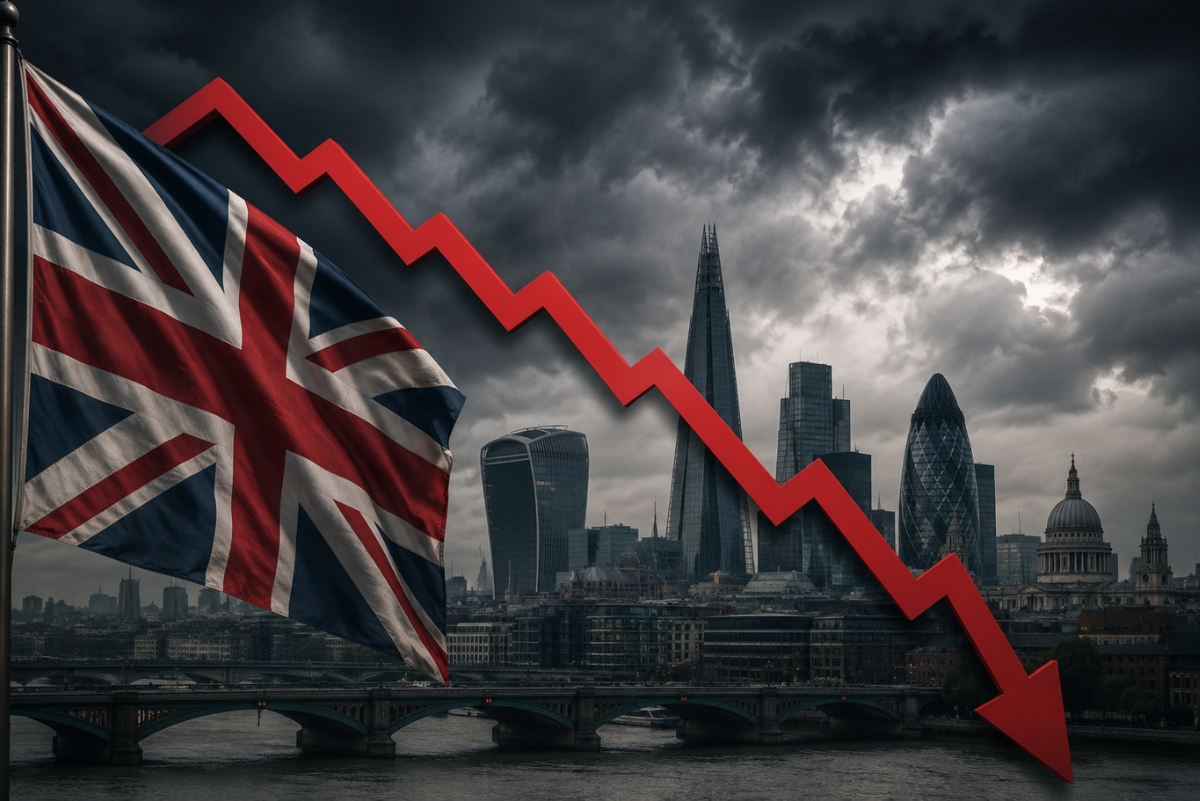

The UK GDP growth 2026 economic outlook deteriorated due to the Middle East conflict disrupting energy supplies and driving inflation. On June 3, 2026, the OECD published forecasts noting the conflict is “raising inflationary pressures and is projected to have adverse impacts on growth.” The OECD specifically forecasts UK GDP growth of 0.9% in 2026 and 1.1% in 2027, with higher inflation expected to peak in the second half of 2026.
The IMF’s April 2026 World Outlook was even more pessimistic, cutting the UK GDP growth 2026 economic outlook to 0.8% and forecasting inflation averaging 3.2% for the year.
Q1 Data vs. Forward Projections
Official Q1 2026 data showed UK GDP growing 0.6%, with services expanding 0.8% and construction recovering 0.4%. However, the UK GDP growth 2026 economic outlook for subsequent quarters is deteriorating rapidly.
UK Finance’s June 2026 review confirms that while Q1 was solid, “services activity contracts in May” with the S&P Global PMI dropping back into contractionary territory for the first time since April 2025. Demand from businesses and consumers dwindled amid concerns about the Iran conflict and rising inflation.
The Inflation Squeeze
The UK GDP growth 2026 economic outlook faces a severe inflation challenge. Headline CPI dropped to 2.8% in April 2026 due to the energy price cap, but a new July cap will raise average household bills by approximately 13%, keeping inflation “well above target for the rest of the year” according to UK Finance.
Core inflation (excluding food and energy) fell to 2.5% in April—the lowest since July 2021—but transport costs driven by petrol price increases since March are reversing this trend. The UK GDP growth 2026 economic outlook depends heavily on oil price stability, which remains uncertain due to Strait of Hormuz shipping disruptions.
Why Executive Education Beats Recession
During the UK GDP growth 2026 economic outlook slowdown, traditional degree programs become risky investments. Two-year MBA programs assume job markets will recover by graduation. With growth at 0.8%, that assumption is dangerous.
The Diploma in AI for Leaders at LSB offers:
– 4-6 week completion (before economic conditions worsen)
– Immediate ROI through AI governance skills
– Recession-resistant competency (automation demand rises during downturns)
– Online delivery options (no relocation costs during inflation)
The UK GDP growth 2026 economic outlook makes speed essential. While GDP stagnates, companies automate. Executives who understand AI strategy become more valuable, not less, during contraction.
The Automation Paradox
The UK GDP growth 2026 economic outlook creates a counterintuitive dynamic: slower growth increases automation pressure. The Resolution Foundation notes that while the labour market is too weak to generate big second-round wage effects, the inevitable rise in CPI inflation from 2.8% in April creates cost pressures that employers address through AI deployment.
Companies facing 0.8% growth and 3.2% inflation cannot afford wage increases. They automate instead. The UK GDP growth 2026 economic outlook therefore creates unprecedented demand for AI-literate leaders who can manage workforce transitions without destroying morale.
Energy Cost Impact
The UK GDP growth 2026 economic outlook is directly tied to energy markets. Brent crude averaged $117.29 in April 2026, and while prices eased slightly by end of May, the July energy price cap increase will push household bills higher, reducing consumer spending power and further dampening growth.
For businesses, this means energy efficiency and AI-driven resource optimization become survival tools, not nice-to-haves. The AI for Leaders diploma includes modules on predictive analytics for supply chain and energy management—precisely the skills needed during the UK GDP growth 2026 economic outlook contraction.
FAQs:
Q: Should I postpone my UK study plans due to the weak UK GDP growth 2026 economic outlook?
A: No. Recessions are precisely when specialized skills become most valuable. The 0.8% growth forecast makes generalist degrees risky, but short-term executive diplomas in AI leadership offer immediate, recession-resistant competencies. Companies automate during downturns—they need leaders who can manage that automation.
Q: How does the UK GDP growth 2026 economic outlook affect job prospects for international graduates?
A: The 18-month Graduate visa (reduced from 24 months from January 2027) combined with weak growth creates a compressed job search window. Employers hire fewer generalists during slowdowns but actively recruit AI governance specialists. Target skills that companies need regardless of GDP growth.
Q: Will the UK GDP growth 2026 economic outlook lead to further visa restrictions?
A: Possibly. The government has already tightened student sponsor compliance (June 1, 2026) and reduced Graduate visa duration. Weak growth typically increases anti-immigration sentiment. However, high-skill routes (Global Talent, Skilled Worker for shortage occupations) usually remain open. Focus on qualifications that qualify for these routes.