The sustainability fraud era is ending, and luxury education hasn’t caught up.
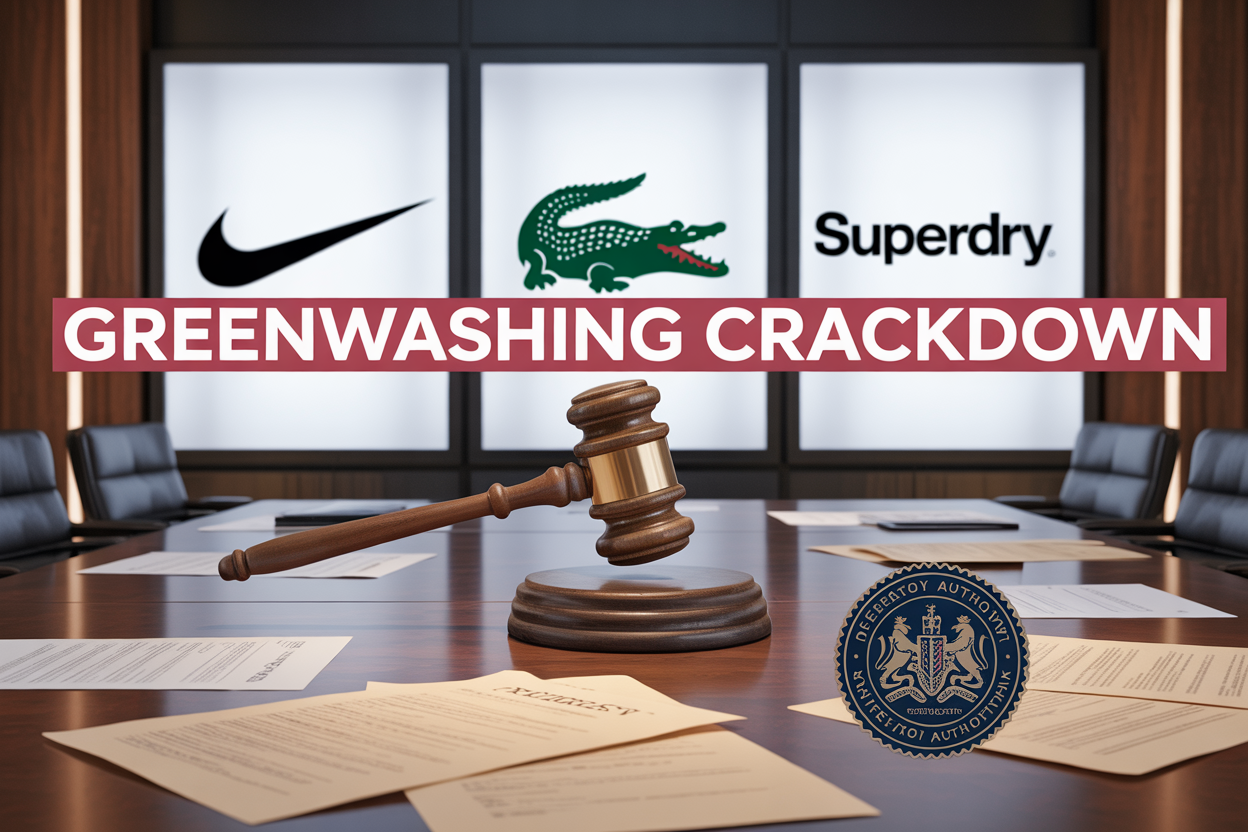
In the first week of February 2026, the UK’s Advertising Standards Authority (ASA) delivered a bombshell ruling: Nike, Lacoste, and Superdry were banned from using “sustainable” in paid search ads because they couldn’t prove the full lifecycle impact of their products. This wasn’t a consumer complaint it was caught by the ASA’s active AI monitoring systems targeting fashion greenwashing.
Meanwhile, Business of Fashion’s year-end review called 2025 “a worrying and controversial year for luxury sustainability,” citing Loro Piana’s links to Italian sweatshops and “ethical cotton” picked by child laborers in India.
The message is clear: Greenwashing is now a liability, not a marketing strategy. And business schools are still teaching sustainability as a PR module rather than an operational reality.
The ASA’s New AI-Powered Greenwashing Police

What makes the February 2026 rulings historic isn’t just the brands named it’s the enforcement mechanism. The ASA deployed active ad monitoring systems that autonomously scan PPC ads for unsubstantiated environmental claims.
The ruling was brutal: “Claims must be based on the full life cycle of the advertised product, unless the ad stated otherwise”. Generic “sustainable” labels without specific evidence? Banned.
This follows the EU’s Corporate Sustainability Due Diligence Directive and Forced Labor Regulation (taking effect 2027), which will ban sale of goods made using forced labor across all stages of the supply chain. The regulatory noose is tightening.
Luxury’s Structural Hypocrisy Exposed
While Nike and Lacoste got slapped on the wrist, luxury’s dirty secret runs deeper. The Loro Piana scandal revealed that factories producing for Dior, Armani, Valentino, and Loro Piana itself were using exploitative subcontractors in Italy while maintaining sustainability certifications.
How does this happen? Because luxury economics demand planned destruction. Bain & Company confirmed that luxury brands deliberately produce 20-30% excess inventory specifically for outlet channels. You cannot have “circular fashion” and outlet empires simultaneously.
As Asket and E.L.V. Denim acknowledged in late 2025, sustainability fatigue is real because the claims were never credible to begin with.
Why Traditional Business Education Fails on Ethics
Most MBA and business programs teach sustainability as:
- ESG reporting frameworks
- Marketing “purpose” strategies
- Carbon accounting spreadsheets
What they don’t teach:
- Supply chain archaeology: How to actually trace subcontracting beyond tier-one suppliers
- The Destruction Paradox: Why luxury brands must burn inventory to maintain margins and how to build models that don’t require it
- Regulatory Survival: Navigating the EU’s 2027 forced labor ban and UK’s ASA AI monitoring
The Level 3 Diploma in Luxury Brand Management at LSBUK confronts this reality. We don’t teach sustainability as a marketing veneer. We teach operational transparency how to build luxury businesses that survive the coming regulatory and generational reckoning.
The Gen Z Enforcement Mechanism
Regulators aren’t the only threat to greenwashers. Generational skepticism is crushing brands caught in lies.
Millennials and Gen Z drive 85% of luxury sales growth, and they have zero tolerance for hypocrisy. When they discover the “sustainable” Gucci bag was produced in the same facility as fast fashion using planned obsolescence models, brand equity craters instantly.
This isn’t “conscious consumerism” it’s radical transparency as default expectation. And most luxury managers are unprepared.
What Real Sustainability Leadership Looks Like
In 2026, sustainability leadership requires:
- Audit-Proof Supply Chains
Not certifications (which Loro Piana had while using sweatshops), but forensic transparency. Our diploma teaches procurement strategies that assume regulators will inspect, not just certify.
- The Courage to Abandon Destruction Models
True sustainability requires abandoning the outlet economy. We examine case studies of brands that chose smaller scale over planned obsolescence and survived.
- Legal Literacy
With the EU banning forced-labor goods in 2027 and the UK using AI to scan ads, managers need legal compliance skills, not just marketing narratives.
- Cultural Appropriation Awareness
Prada’s 2025 Kolhapuri sandal scandal selling $2,000 versions of $5 Indian crafts without compensating artisans shows sustainability includes ethical design sourcing.
The Education Gap
The luxury industry is facing an ethics talent shortage. Brands need managers who understand that sustainability isn’t a department it’s survival.
Our Diploma in Luxury Brand Management teaches:
- Supply chain reality: How “ethical cotton” ends up picked by child laborers despite certifications
- The Outlet Economy: Why secondary markets destroy circular economy claims
- ASA-Compliant Marketing: How to make sustainability claims that survive AI monitoring
- Stakeholder Capitalism: Balancing profit with the transparency Gen Z demands
Conclusion: The Greenwashing Window Has Closed
The February 2026 ASA rulings aren’t warnings they’re death sentences for brands still playing 2015’s greenwashing playbook. With AI monitoring ads, EU forced labor bans incoming, and Gen Z buying power peaking, luxury needs managers trained in radical transparency, not creative PR.
Don’t learn sustainability from institutions teaching yesterday’s greenwashing.
Enroll in the Level 3 Diploma in Luxury Brand Management and learn to lead luxury’s real future ethical, transparent, and audit-proof.
FAQs:
Q: If luxury brands are all greenwashing, is genuine sustainability even possible in this sector?
A: Yes, but it requires abandoning the growth-at-all-costs model. Our diploma examines “degrowth” luxury strategies and circular business models that actually work. It’s harder, but it’s the only approach that survives 2027’s regulatory changes.
Q: How does the diploma address the legal aspects of new regulations like the EU Forced Labor ban?
A: We integrate compliance training throughout the curriculum, including due diligence frameworks and supply chain auditing protocols. By 2027, these won’t be “nice-to-have” skills they’ll be license-to-operate requirements.
Q: I’m already working in luxury marketing. Will this diploma force me to start over?
A: No it amplifies your existing expertise. Many students are mid-career professionals adding sustainability credentials to avoid being blindsided by regulations. The modular format lets you apply learnings immediately to your current role.